
Abstract
Objectives: Acceptance and commitment therapy (ACT) has accumulated increasing evidence-base for a broad range of mental health issues. Considering that ACT encourages broad and flexible patterns of behaviour and neutralizes the pervasive psychological processes proposed to be caused by most individuals’ distress, such a modality may be effective for ADHD. This review aimed to give a synthesis of the studies, so far, focusing on the usefulness of ACT approaches among individuals having ADHD.
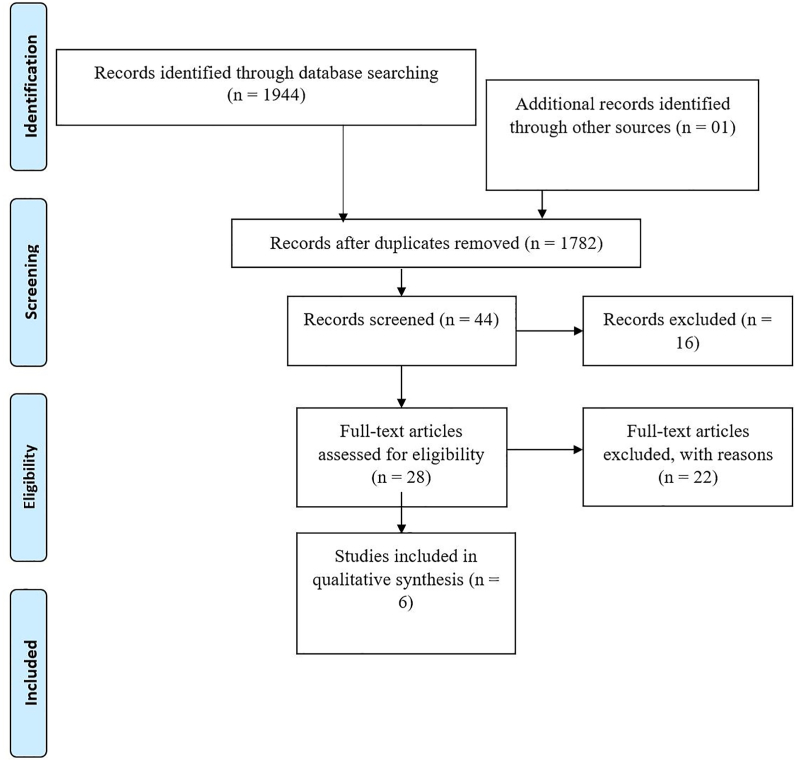
Design/methods: This scoping review searched studies exploring the effectiveness of ACT approaches for individuals with ADHD across eight electronic databases (Medline, Embase, PsycInfo, ScienceDirect, PubMed, Emcare, Scopus, and Google Scholar). This review was based on a total of two quasi-experimental and four experimental studies.
Results: A thematic analysis was suggested based on the PRISMA guidelines. Overall, the review presented preliminary evidence demonstrating the use of ACT among individuals with ADHD. It was found that the ACT was used to treat a variety of behavioural and psychosocial outcomes, which included reducing ADHD symptoms (e.g., impulsivity, inattention, inflexibility, etc.) and other sequelae related to the ADHD diagnosis such as poor quality of life, academic procrastination, depression and anxiety symptoms, and psychological maladjustment.
Conclusions: This review revealed that ACT was a flexible approach that could be adapted to deliver both targeted treatment of ADHD symptomatology and more general psychosocial issues. It could also be delivered in group or individual formats. Nevertheless, although the findings of the present scoping review indicate promising results, more research is needed.
Keywords: Acceptance and commitment therapy; Attention deficit hyperactivity disorder; Psychosocial treatment; Scoping review.
© 2021 Published by Elsevier Ltd.
Conflict of interest statement
The authors declare no conflict of interest.
Figures
Similar articles
-
Med J Aust. 2020 Dec;213 Suppl 11:S3-S32.e1. doi: 10.5694/mja2.50881.PMID: 33314144
-
Amphetamines for attention deficit hyperactivity disorder (ADHD) in adults.
Cochrane Database Syst Rev. 2018 Aug 9;8(8):CD007813. doi: 10.1002/14651858.CD007813.pub3.PMID: 30091808Free PMC article. -
Cochrane Database Syst Rev. 2019 Jun 21;6(6):CD008223. doi: 10.1002/14651858.CD008223.pub3.PMID: 31222721Free PMC article.
-
BMJ Open. 2024 Feb 13;14(2):e078026. doi: 10.1136/bmjopen-2023-078026.PMID: 38355179Free PMC article.
-
Front Psychol. 2021 Apr 9;12:576943. doi: 10.3389/fpsyg.2021.576943. eCollection 2021.PMID: 33897515Free PMC article.
Cited by
-
Is ADHD a way of conceptualizing long-term emotional stress and social disadvantage?
Front Public Health. 2022 Nov 3;10:966900. doi: 10.3389/fpubh.2022.966900. eCollection 2022.PMID: 36424967Free PMC article.Review. -
Internet Interv. 2023 Jun 24;33:100636. doi: 10.1016/j.invent.2023.100636. eCollection 2023 Sep.PMID: 37483263Free PMC article.
-
JMIR Ment Health. 2025 Feb 27;12:e56066. doi: 10.2196/56066.PMID: 40053767Free PMC article.Review.
-
BJPsych Open. 2024 Sep 26;10(5):e163. doi: 10.1192/bjo.2024.743.PMID: 39324244Free PMC article.
References
-
- A-tjak J.G., Davis M.L., Morina N., Powers M.B., Smits J.A., Emmelkamp P.M. A meta-analysis of the efficacy of acceptance and commitment therapy for clinically relevant mental and physical health problems. Psychother. Psychosom. 2015;84(1):30–36. – PubMed
- AAP ADHD: clinical practice guideline for the diagnosis, evaluation, and treatment of attention-deficit/hyperactivity disorder in children and adolescents. Pediatrics. 2011;128(5):1007–1022. – PMC – PubMed
- APA . American Psychiatric Association: American Psychiatric Publishing; 2013. Diagnostic and Statistical Manual of Mental Disorders.
- APA . Author; Arlington, VA: 2013. Diagnostic and Statistical Manual of Mental Disorders.
- Arksey H., O’Malley L. Scoping studies: towards a methodological framework. Int. J. Soc. Res. Methodol. 2005;8(1):19–32.